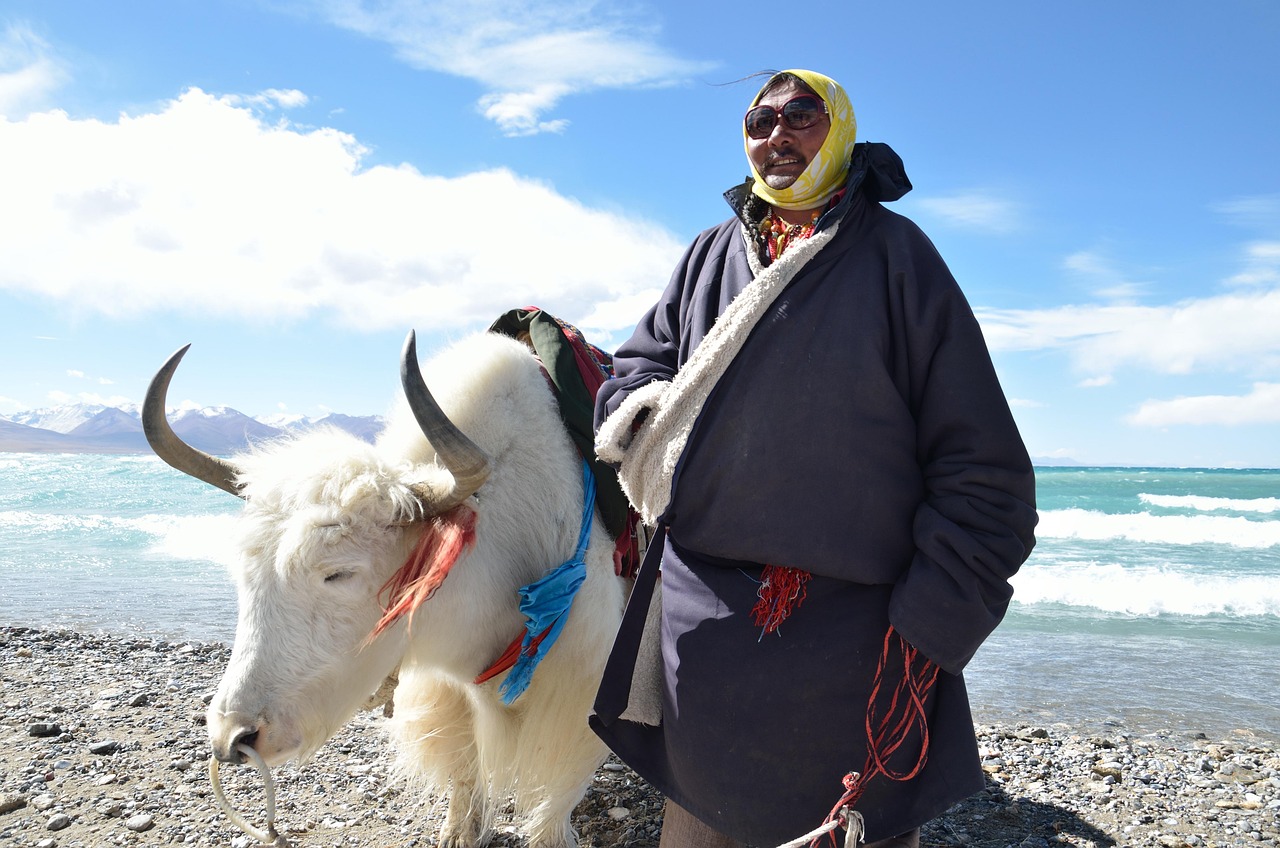
In the high-altitude regions of the Qinghai-Tibet Plateau, yak herding has been central to Tibetan life for centuries. Yaks provide vital resources—milk, meat, and wool—that sustain daily living in one of the world’s most demanding environments.
Over generations, these ingredients have given rise to a distinct food culture. Yak milk, rich and creamy, is used to make yogurt, hard cheeses, and churned into butter, a staple that fuels herders through long, cold days. This butter is often blended with brewed black tea from the Pemagul region and salt to make yak butter tea—a salty, warming drink that is both sustenance and ritual, sipped throughout the day.
Yak meat, lean and gamey, is traditionally air-dried into tough strips, allowing it to keep for months without refrigeration, a necessity in a region where fresh produce is scarce. These foods, simple yet deeply tied to the rhythms of herding life, reflect a diet shaped by altitude, climate, and the yak’s central role in daily survival.
But these traditions now face serious threats. China’s 2025 No. 1 Central Document emphasizes agricultural modernization, calling for the consolidation of small farms into large, technology-driven operations to boost grain production and national food security. While the policy aims to stabilize domestic supply chains, it inadvertently sidelines traditional yak herding, which depends on open grazing and small-scale autonomy.
At the same time, mass relocations of rural Tibetan villages (framed by the government as poverty alleviation) has removed families from their traditional pastures and placed them into prefabricated housing developments far from their home. These resettlements fracture the continuity of herding life and make traditional food practices nearly impossible to maintain.
Additionally, younger generations are migrating to urban areas in search of better economic opportunities, leading to a decline in the labor force necessary for traditional herding practices. This shift further erodes the transmission of cultural knowledge and culinary traditions associated with yak herding.
Efforts to integrate yaks into the market economy, driven by increasing beef consumption in China, have led to the industrialization of yak farming. Large-scale slaughtering enterprises have been established in Tibet to meet the growing demand for meat in urban centers.
Preserving yak herding is vital not just for biodiversity and environmental stability on the plateau, but also for the culinary and cultural heritage of the Tibetan people. Without it, traditions like yak butter tea, dried meats, and herder cuisine may vanish within a generation.
Tibetan Yak-Herding
Herders once thrived on Tibet's yak butter, dried meat and mountain herbs. How communism is killing their community.