The Indigenous people of the Amazon have fed themselves not by reshaping the forest but by living in harmony with it. Across the basin, communities like the Yanomami, Ticuna, and Asháninka have developed foodways that reflect biodiversity, reciprocity, and deep ecological knowledge. But as deforestation, mining, land grabs, and dietary shifts accelerate, these traditions are eroding along with the forest itself.
The Yanomami of northern Brazil and Venezuela rely on a mix of hunting, fishing, gathering, and shifting horticulture. They cultivate plantains, tubers, and cassava in forest gardens cleared with care. Hunting and river fishing complement the diet, and food is shared communally. The knowledge of what to plant, what to harvest, and when, is passed orally generation to generation.
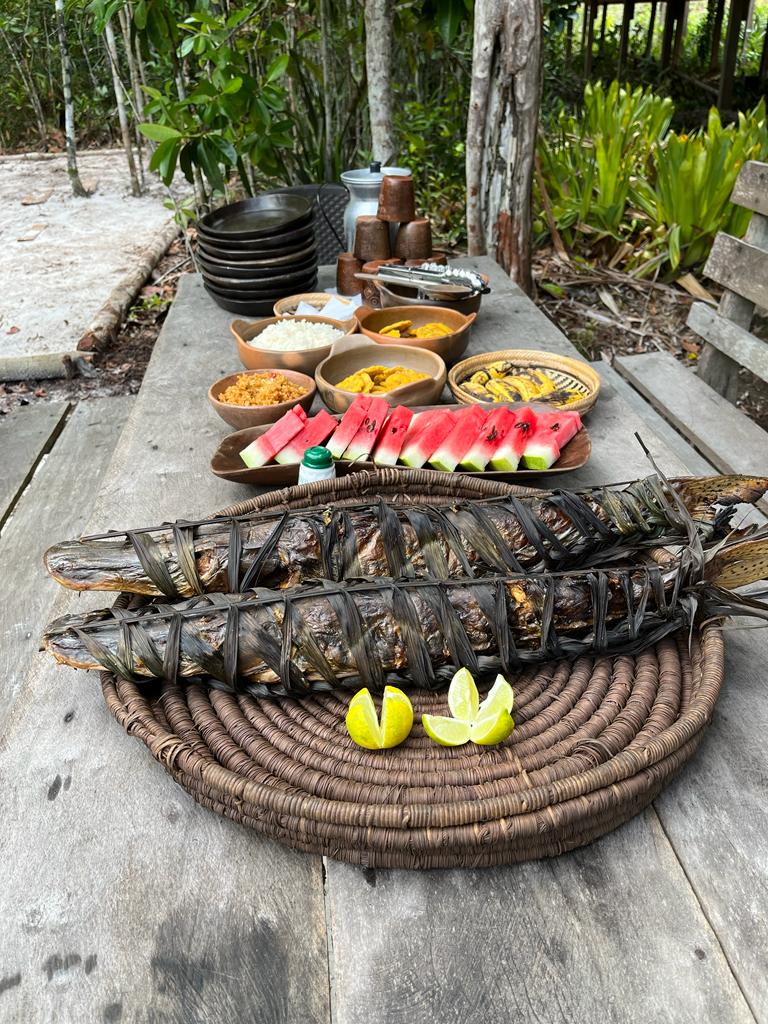
The Ticuna, one of the largest Indigenous groups in the Brazilian Amazon, center their diet around cassava and fish. Fish is often prepared as moqueado (pictured above), salted, wrapped in banana leaves, and slow-cooked in a pit over heated stones.
The Asháninka of the Peruvian Amazon grow cassava alongside corn, plantains, and peanuts. They prepare masato, a fermented drink made by chewing boiled cassava to initiate fermentation. Masato is central to ceremonies, storytelling, and hospitality, and is often shared in large communal gatherings.
Indigenous Amazonian cuisine is rooted in adaptability and respect for the environment. Signature dishes include:
Moqueado – Fish salted and wrapped in banana leaves, then cooked in pits lined with leaves and heated stones. This slow method preserves fish without refrigeration and imparts unique smoky flavors.
Masato – A mildly alcoholic cassava drink made through fermentation, often started by chewing the root. It is served at ceremonies, social events, and daily gatherings.
Juane – Found in the Peruvian Amazon, juane is made of rice, meat (traditionally chicken), olives, and hard-boiled eggs, wrapped in bijao leaves and boiled. It’s traditionally eaten during the feast of St. John the Baptist and reflects the blending of Indigenous and Christian food traditions.
Across the region, threats to these foodways are growing. Deforestation for soy, cattle, and illegal mining destroys the rivers and forests these diets depend on. Climate change alters seasons and reduces biodiversity. Meanwhile, the spread of processed foods often linked with government aid or urbanization has triggered spikes in diet-related illnesses in Indigenous communities.
Younger generations, pulled toward cities or facing displacement, are less likely to inherit traditional food knowledge. Without forests and elders to teach it, the recipes fade.
Indigenous Amazonian foodways are living libraries of how to survive—and thrive—in one of the world’s most complex ecosystems. They hold keys to biodiversity conservation, climate resilience, and sustainable living. When the forest is destroyed, this knowledge is lost—not just to its people, but to all of us.
Amazonian Foodways
Deeply tied to the forest, these food systems are under threat due to deforestation, loss of biodiversity, and encroaching agribusiness.